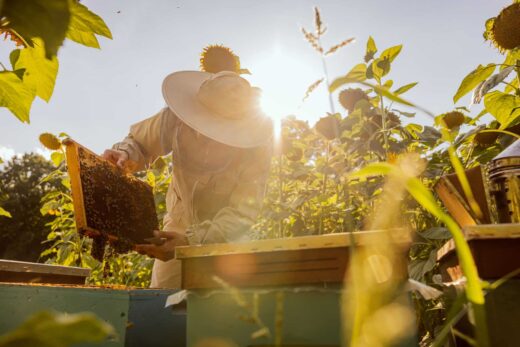
Beekeeping, the art of keeping bees, is fascinating more and more people in search of a sustainable, environmentally-friendly way of life. Whether you’re a curious amateur or a future beekeeper, this article will guide you through the essentials of beekeeping: bee swarms, hives and making homemade honey.
Understanding Bee Swarms
A bee swarm is a group of thousands of bees, led by a queen, which separates from its original colony to create a new hive. This natural phenomenon generally occurs in spring, when food resources are abundant. Watching a swarm is both impressive and crucial for beekeepers, as it’s an opportunity to capture and set up a new colony in a prepared hive.
Beehives: Shelter and Production
Modern hives are designed to maximize honey production while providing a safe habitat for bees. There are several types of hive, but the most common are Langstroth, Dadant and Warré.
- Langstroth hive: Very popular, this hive features removable frames for easy honey harvesting and colony management.
- Dadant hive: Similar to the Langstroth but with larger frames, this hive is often used by professional beekeepers.
- Warré hive: Also known as an “ecological hive”, it is designed to mimic the natural habitat of bees, and requires less intervention by the beekeeper.
Each type of hive has its own advantages and disadvantages, but they all aim to provide an optimal environment for honey production.
Making homemade honey
Producing artisanal honey is a rewarding adventure that requires patience and know-how. Here are the key steps to making delicious, natural honey:
- Hive installation: Choose a sheltered, sunny location, away from human traffic to minimize disturbance.
- Swarm capture and installation: If you capture a swarm, carefully introduce it into the hive, ensuring that the queen is well installed.
- Maintenance and Monitoring: Regularly check the condition of the hive and the health of the colony. Make sure the bees have enough food, especially in winter.
- Honey harvest: At the right time, usually late summer, harvest the honey-filled frames. Use a honey extractor to separate the honey from the combs without destroying them.
- Filtering and packing: Filter the honey to remove impurities and pack into clean jars.
The benefits of artisanal honey
Artisanal honey is prized for its purity and health benefits. Unlike industrial honey, which is often pasteurized, homemade honey retains all its nutritional and medicinal properties. It is rich in antioxidants, enzymes and minerals, making it a food of choice for boosting the immune system and aiding digestion.
Come and discover our beehives at our gîte Le Clos des Collines in Gréoux les Bains.